

Related Products
Learn more about Unilab’s commitment to quality and explore our range of trusted healthcare products.
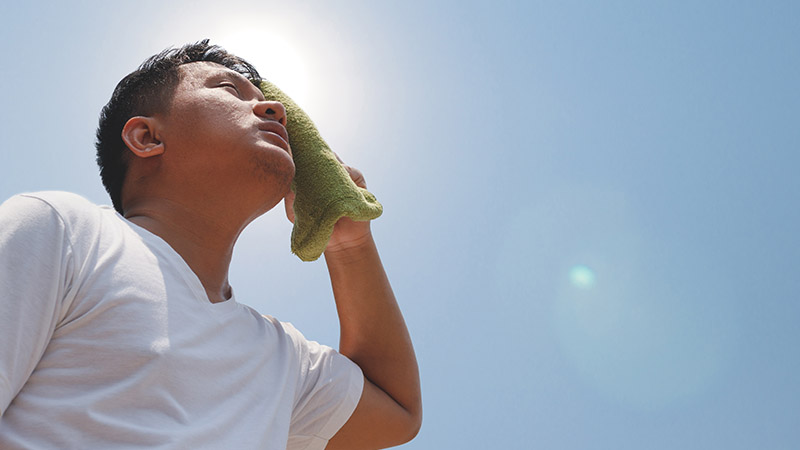
The Philippines is a tropical country where storms are strong and heat waves are harsh. Heatstroke can be a common occurrence in a place where temperatures can reach as high as 40 degrees Celsius. Keep yourself protected by learning more about the signs of heatstroke and how you can prevent it from happening to you.
What is heatstroke?
When you are exposed to high temperatures for long periods of time, it may cause your body to overheat and lead to a condition called heatstroke. Those who work under the direct heat of the sun on a daily basis are more at risk of developing heatstroke. Athletes who undergo rigorous training outdoors are also at risk since the combination of the heat and a rise in their core body temperature after exercising may also result in another type of heatstroke called exertional heatstroke. When you experience heatstroke, your body is no longer able to cool down itself.
Heatstroke versus Heat Exhaustion
Heatstroke is a more serious condition compared to heat exhaustion. The National Health Services differentiates the two based on the severity of the symptoms:
| Heat Exhaustion | Heatstroke | |
|
|
It is important to know the basics when it comes to dealing with those with heatstroke since it can happen to anyone. Time is of the essence since heatstroke is classified as a medical emergency—follow these steps if you are experiencing heatstroke or if someone with heatstroke needs your help.
First Aid Practices
Preventive measures
Heat exhaustion and heatstroke can be avoided. The first thing that you need to do is to keep away from the direct heat of the sun most especially from noon until late afternoon when heat is at its peak. Other effective ways to prevent heatstroke include:
Once you reach the hospital, the doctor may recommend tests to help diagnose your condition. A rectal temperature examination is one of the most accurate ways to determine your body’s temperature. Other tests may also be administered like x-rays, blood tests to help determine sodium/potassium levels, and urine tests (dark urine can be a sign of dehydration).
The dry season is here and expectedly hotter days will come. Protect yourself by avoiding certain practices that may put you at risk of heatstroke.
General disclaimer
Your doctor will always be in the best position to give the appropriate medical advice for your condition. For suspected undesirable drug reaction, seek medical attention immediately and report to the FDA at www.fda.gov.ph and UNILAB, Inc. at 8-UNILAB-1 or productsafety@unilab.com.ph. Always buy your medicine from your trusted drugstores and retailers.
Sources:
https://www.sheffieldccgportal.co.uk/clinical-guidance
https://www.mayoclinic.org/diseases-conditions/heat-stroke/symptoms-causes/syc-20353581
https://www.nhs.uk/conditions/heat-exhaustion-heatstroke/
https://www.aafp.org/pubs/afp/issues/2005/0601/p2133.html
Read about the latest updates and news on our healthcare initiatives, partnerships, and advocacy programs