
Related Products
Learn more about Unilab’s commitment to quality and explore our range of trusted healthcare products.
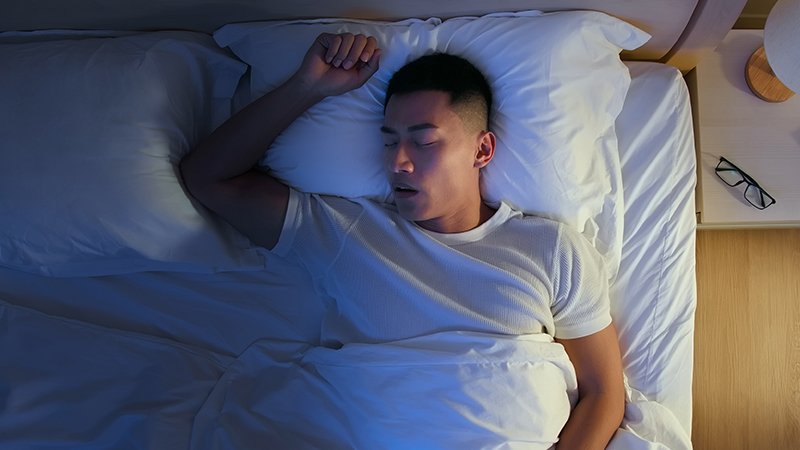
“Masama ba ang malakas na paghilik?” Maybe you are worried about a loved one’s snoring, or your own snoring might be a cause for concern. In this article, we will be talking about snoring (paghihilik), why it happens, and when to consult a doctor about excessive snoring.
Snoring is the sound caused whenever a sleeping person’s airflow gets blocked or restricted. An important thing to remember is that snoring is not always a sign that something is wrong with your health. Snoring is perfectly natural; even babies or young children snore every so often. Occasional or mild snoring is usually not a cause for concern.
However, loud and/or frequent snoring can sometimes be worrisome. This is especially true when it is accompanied by gasping for air as well as other symptoms such as fatigue or irritability.
There are a number of possible reasons why people snore, such as:
If snoring causes the following problems, it would be best to talk to a doctor about it:
While snoring does not pose an immediate health concern, dealing with it early on and with the help of a healthcare professional can help save you a lot of trouble down the road.
Going back to the question of whether loud snoring should be a cause for concern, the reason why people commonly associate snoring with health problems is because of sleep apnea.
Sleep apnea is a condition wherein a person’s breathing stops and starts while they are sleeping. This makes it difficult for the body to get enough oxygen while sleeping. One common symptom of sleep apnea is loud and/or constant snoring, but you can also have sleep apnea without this symptom.
Diagnosing sleep apnea can be done through what is called a sleep study wherein your breathing and other functions are monitored while sleeping.
Treating sleep apnea is commonly done through a continuous positive air pressure machine or CPAP. This delivers air continuously through a person’s lungs and keeps their airways open so that they can breathe properly while sleeping.
However, there are also other ways to deal with snoring naturally at home without a CPAP machine.
If you, or a loved one, are suffering from snoring, you have probably asked yourself the question, “Paano mawala ang paghilik?” or “Paano maiiwasan ang paghilik?” While the best way to go about it would be to consult a doctor, there are some ways to deal with snoring naturally. Here are some of the things you can do.
Sleeping on your back can increase the likelihood of snoring. One of the simplest things you can do to address snoring is to sleep on your side, supported by pillows.
If you are overweight or obese, achieving a healthier weight may help with sleep apnea. Weight loss can not only help lower the risk of sleeping problems, but it can also help lower the risk of cardiovascular problems and can improve your overall health.
If your snoring is significantly loud, anti-snoring devices may help. Anti-snoring devices include:
Mouth exercises, or oropharyngeal exercises, involve moving your tongue or mouth repeatedly to strengthen specific muscles in the mouth in order to prevent snoring.
Smoking tobacco is associated with snoring, in addition to being a known risk factor for lung cancer and chronic obstructive pulmonary disease (COPD). Drinking alcohol, especially before bed, has also been known to increase the chances of snoring. This is true even among people who do not usually snore.
Snoring is a fairly common condition. For the most part, snoring is no cause for concern and is not always a sign that there might be a problem.However, when snoring becomes too loud or excessive, then it might be a good idea to get in touch with a doctor to figure out what causes it, and what can be done about it.
General disclaimer
Your doctor will always be in the best position to give the appropriate medical advice for your condition. For suspected undesirable drug reaction, seek medical attention immediately and report to the FDA at www.fda.gov and UNILAB Inc. at 8-UNILAB-1 or productsafety@unilab.com.ph. Always buy your medicine from your trusted drugstores and retailers.
References:
Snoring: Harmless or Dangerous?, Accessed October 1, 2024
Snoring: Causes, Remedies & Prevention, Accessed October 1, 2024
Snoring - Symptoms and causes - Mayo Clinic, Accessed October 1, 2024
What Causes Snoring And When to See a Doctor About It | Houston Methodist On Health, Accessed October 1, 2024
Sleep Apnea - What Is Sleep Apnea? | NHLBI, NIH, Accessed October 1, 2024
How to Stop Snoring: 10 Ways to End Noisy Nights, Accessed October 1, 2024
Choosing the Best Sleep Position | Johns Hopkins Medicine, Accessed October 1, 2024
Losing Tongue Fat Improves Sleep Apnea - Penn Medicine, Accessed October 1, 2024
Snoring and Snore-Reducing Devices, Accessed October 1, 2024
Mouth Exercises to Stop Snoring | SleepApnea.org, Accessed October 1, 2024
Read about the latest updates and news on our healthcare initiatives, partnerships, and advocacy programs